Astigmatism is a common focusing problem caused by the shape of the cornea or the lens inside the eye. It can make nearby and distant objects look blurry or distorted. An eye exam can identify it, and glasses or contact lenses often help.
What happens inside the eye?
The cornea is the clear front surface of your eye. It works with the lens inside your eye to bend light toward the retina, the light-sensitive tissue at the back. With astigmatism, differences in curvature prevent light from focusing as it should.
You may hear a comparison to a football rather than a basketball. This is a simplified way to describe curvature, not a claim that the entire eye is football-shaped. Astigmatism is one type of refractive error, or focusing problem.
What causes astigmatism?
Some people are born with it, while others develop it during childhood or young adulthood. It can also appear after an eye injury or surgery. The exact cause is not always known, and there is no established way to prevent it. The National Eye Institute explains how astigmatism develops.
Which symptoms should you mention?
Common symptoms include blurred vision, frequent squinting, headaches, eye strain, and difficulty seeing at night. Mild astigmatism may cause few noticeable symptoms. Children may not recognize that their vision could be clearer.
These symptoms do not identify astigmatism on their own. Tell your eye doctor what you notice, whether it affects one or both eyes, and which activities are difficult. Mention problems that continue while wearing your current glasses or contacts.
How does an eye exam help?
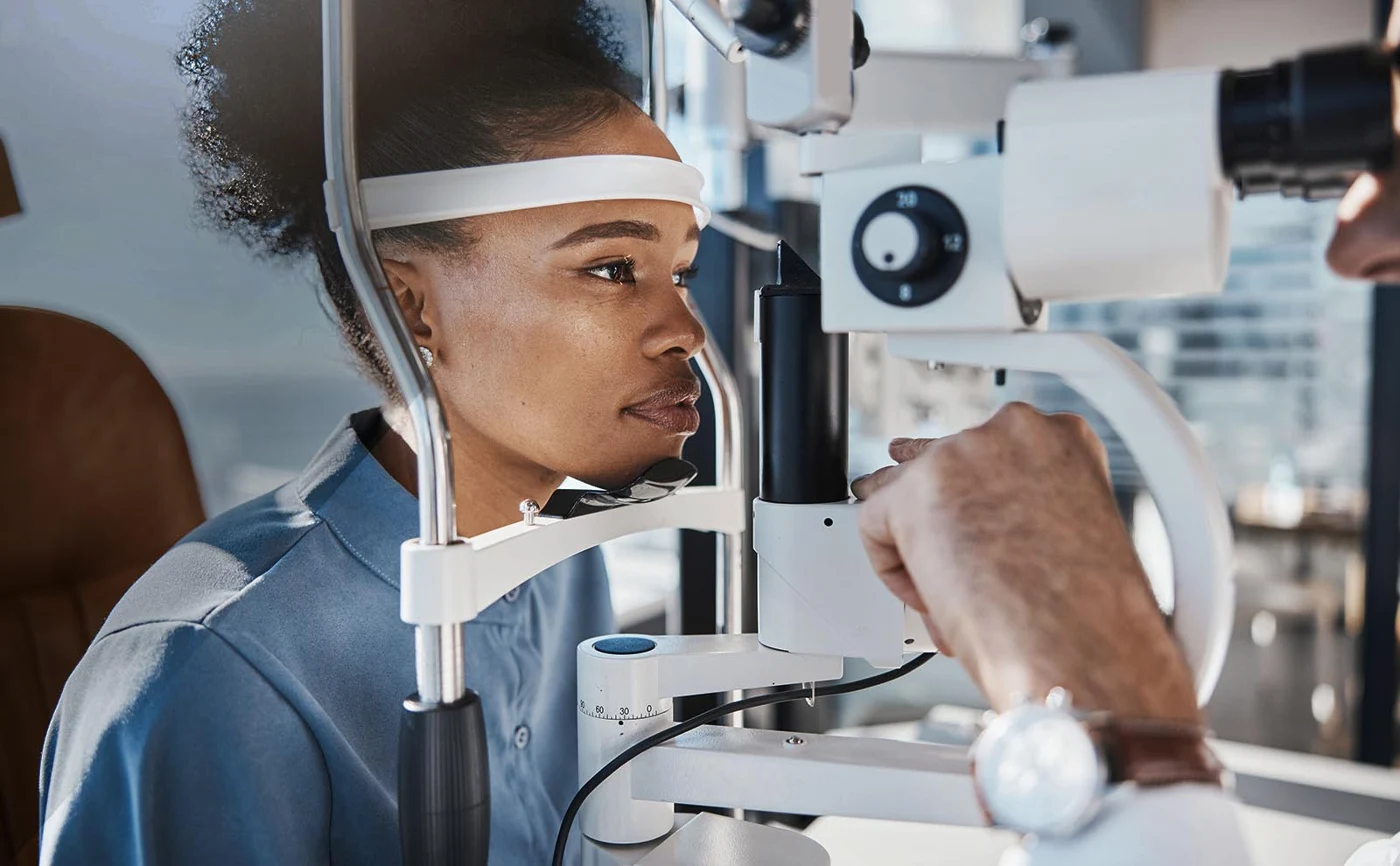
An examination checks how clearly you see and whether you need a prescription. Your doctor also considers eye health, rather than relying on symptoms alone. Depending on your needs, the visit may include dilation to examine the inside of your eyes.
Bring your current glasses and information about any contact lenses you wear. Ask what your results mean and when you should return for another exam.
What are the treatment options?
Glasses and contact lenses change how light enters your eyes to improve focus. Some people with mild astigmatism may not need correction. Surgery can be an option for selected patients, but suitability requires evaluation and a discussion of benefits, limitations, and risks.
A comprehensive eye exam is the starting point. We can explain your prescription, discuss the activities that matter to you, and help you understand which vision correction options fit your needs.